Someone gives you a size in soot and your tape measure only shows millimetres. The good news: one soot is exactly 3.175 mm, so the conversion takes one multiplication, and you can do most of it in your head.
What a soot actually is
A soot is simply one eighth of an inch. Eight soot make one inch, and since 1959 the inch has been defined internationally as exactly 25.4 mm. Divide 25.4 by 8 and you get 3.175 mm.
That number is not a rounded estimate. It is exact, which means you can convert soot to millimetres with zero error as long as you keep all three decimals.
The formula, in plain words
There are only two operations to remember:
- Soot to millimetres: multiply by 3.175. Millimetres to soot: divide by 3.175.
- Soot to inches: divide by 8. Inches to soot: multiply by 8.
In other words, the number of soot tells you how many eighths of an inch you have. Turning that into millimetres is just a matter of scaling each eighth up to its 3.175 mm.
A worked example
Say a measurement is given as 12 soot.
- In millimetres: 12 × 3.175 = 38.1 mm
- In inches: 12 ÷ 8 = 1.5 inches
Now the other way round. You have a part that is 2 inches long and need it in soot: 2 × 8 = 16 soot. And a 10 mm measurement? 10 ÷ 3.175 = about 3.15 soot, a little more than three eighths of an inch.
Quick reference: 1 to 8 soot
| Soot | Inches | Millimetres |
|---|---|---|
| 1 | 1/8 | 3.175 |
| 2 | 1/4 | 6.35 |
| 3 | 3/8 | 9.525 |
| 4 | 1/2 | 12.7 |
| 5 | 5/8 | 15.875 |
| 6 | 3/4 | 19.05 |
| 7 | 7/8 | 22.225 |
| 8 | 1 | 25.4 |
Two anchors make the whole table easy to rebuild from memory: 4 soot is half an inch (12.7 mm) and 8 soot is a full inch (25.4 mm). Everything else sits in between in steps of 3.175 mm.
A mental shortcut that stays close
If you have no calculator, multiply the soot by 3.2 instead of 3.175. For 12 soot that gives 38.4 mm instead of 38.1 mm, an overestimate of about 0.8%. For a rough check on site, that is usually close enough. For anything that has to fit precisely, use the exact figure.
Where else you meet eighths of an inch
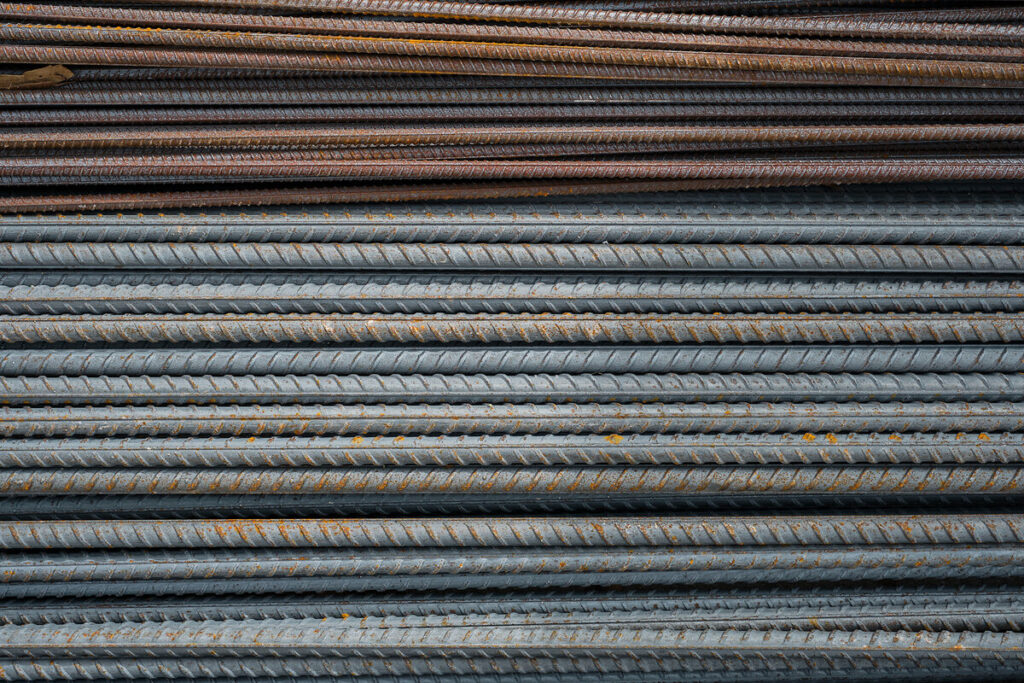
The US system for steel reinforcing bars uses the same logic. A bar number such as #4 or #8 is the bar’s diameter in eighths of an inch, so a #4 bar is 4/8 of an inch (12.7 mm) across and a #8 bar is a full inch (25.4 mm). Put another way, the US bar number is the diameter in soot.
Common mistakes to avoid
Reading soot as millimetres
4 soot is 12.7 mm, not 4 mm. Mixing up the two units gives a size more than three times too small.
Rounding 3.175 down to 3
It feels harmless, but it cuts every result by about 5.5%. On 12 soot you would get 36 mm instead of 38.1 mm, more than 2 mm short, and the gap grows with the size.
Assuming metric sizes land on whole soot
Round metric sizes almost never match a whole number of eighths. A 12 mm diameter is about 3.78 soot, not 4 soot (which is 12.7 mm). A 16 mm diameter is about 5.04 soot. If two parts have to fit together, check which unit each one was actually made in before treating them as the same size.
Convert it instantly
If you would rather skip the arithmetic, the soot to mm and inch converter updates all three values as you type, with up to 5 decimal places.