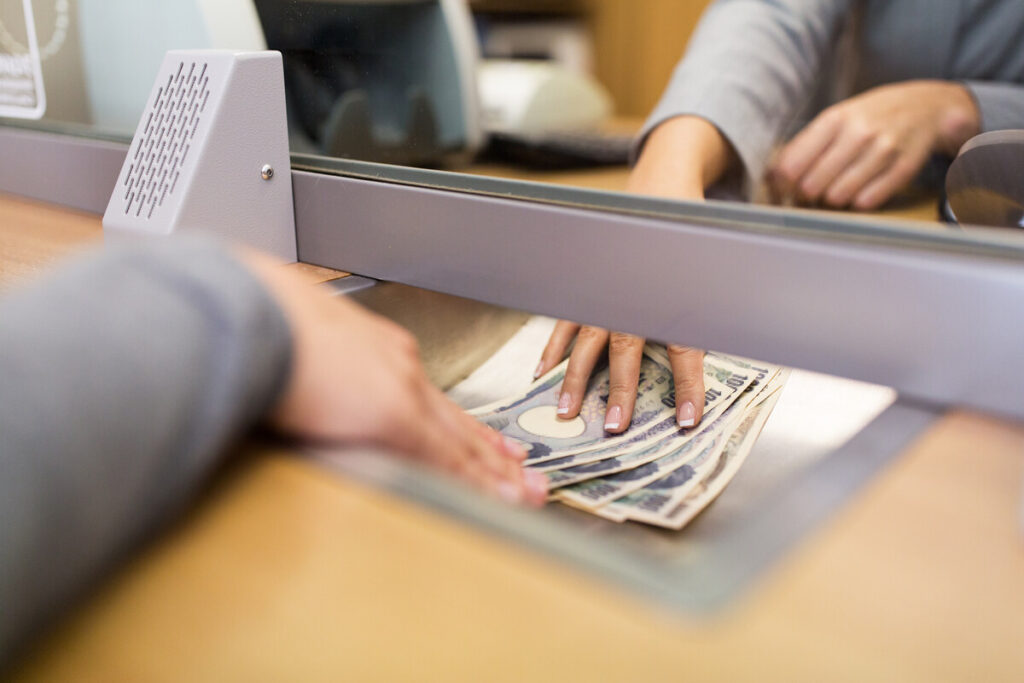
You land in Tokyo, the airport kiosk shows a board full of numbers, and you have about ten seconds to decide whether the deal is fair. The good news: checking any exchange rate takes one multiplication, one division and a quick look at the gap between two numbers.
What an exchange rate actually tells you
An exchange rate is simply the price of one currency expressed in another. If 141 Japanese yen trade for 1 US dollar, the price of a dollar in yen is 141. That is all the number means: how many units of one money you get for one unit of the other.
Most major currencies, including the dollar, the euro and the yen, float freely, which means their price is set by supply and demand on the market and changes constantly. Some countries instead peg their currency to another one. China, for example, held the yuan at 8.2768 per US dollar between 1994 and 2005. Either way, the rate you are offered on a given day is just a price, and like any price it can be checked.
Direct vs indirect quotes: read the board the right way
The same rate can be written in two directions, and mixing them up is the most common traveler mistake.
- Direct quote: local currency per one unit of foreign currency, for example €0.8989 = US$1.00
- Indirect quote: foreign currency per one unit of local currency, for example US$1.11 = €1.00
These two lines describe the same market. Divide 1 by 0.8989 and you get about 1.11, so one is just the flip side of the other. Before doing any math, check which currency is the “1” on the board.
The formula you need
Once you know the direction of the rate, conversion is one line:
Amount in currency B = amount in currency A × exchange rate (A to B)
To go the other way, you divide instead of multiplying. That is the whole method.
A real example: changing 500 dollars into yen
With a rate of 141 yen per dollar, a traveler changing 500 dollars should receive:
500 × 141 = 70,500 yen
Now flip it to price things on the spot. A meal listed at 1,500 yen costs 1,500 ÷ 141, or about 10.64 dollars. A 10,000 yen train pass works out to roughly 70.92 dollars. Keeping “divide by 141” in mind lets you translate any price tag in your head.
The hidden cost: the gap between buying and selling
The rate in the news is not exactly the rate you get at a counter. Every money changer quotes one price to buy a currency and another to sell it, and the difference is called the bid-ask spread. It is how the exchange makes money, and it quietly shrinks what lands in your wallet.
Here is a hypothetical illustration. Say the kiosk gives you 135 yen per dollar instead of 141:
- 500 × 135 = 67,500 yen
- That is 3,000 yen less than the 70,500 you expected
- 3,000 ÷ 70,500 is about 4.3 percent of your money gone
The spread also bites a second time when you change leftovers back. If the same kiosk buys yen back at 147 per dollar, your last 10,000 yen become 10,000 ÷ 147, or about 68.03 dollars, instead of 70.92. You pay the spread on the way in and again on the way out, so changing only what you need usually beats changing a large amount and converting the rest back.
Common mistakes to avoid
- Multiplying when you should divide. If your answer looks wildly too big or too small, you probably used the rate in the wrong direction.
- Comparing only one number. A booth can advertise an attractive rate on one side of the board and a poor one on the other. Look at the rate for the exact direction you are changing.
- Assuming a rate stays put. Floating currencies move every day, so a rate you noted a month before the trip is a ballpark, not a promise.
The quick rule to remember: find the base rate, multiply or divide in the right direction, then compare what the counter actually hands you with what the math says you should get. The difference is the real price of the exchange.