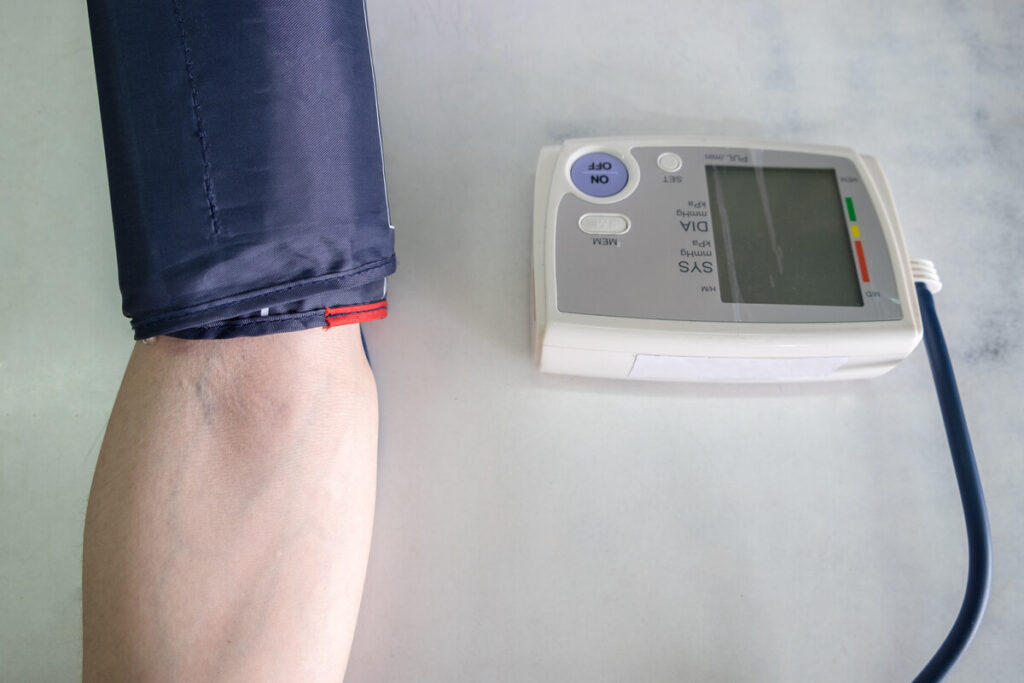
A blood pressure reading such as 130/80 is two numbers, but you can get two more from it with simple subtraction and division: your pulse pressure and your mean arterial pressure.
What the two numbers on your monitor mean
Blood pressure is the pressure of circulating blood against the walls of your blood vessels, measured in millimetres of mercury (mmHg). The top number is the systolic pressure, the maximum during one heartbeat. The bottom number is the diastolic pressure, the minimum between two heartbeats.
For reference, a normal resting adult reading is under 120/80 mmHg according to the AHA and ACC, and over 90/60 mmHg. A low reading is usually not a problem unless it causes symptoms.
The simple formula behind pulse pressure
Pulse pressure = systolic minus diastolic. In plain language, it is the size of the “swing” your arteries go through with every heartbeat.
Wikipedia, citing medical sources, gives these rules of thumb:
- A healthy pulse pressure is around 40 mmHg.
- 50 mmHg or more raises the risk of cardiovascular disease, and a pulse pressure that is consistently 60 mmHg or higher is likely linked to disease.
- It is considered low if it is less than 25% of the systolic number.
The simple formula behind mean arterial pressure
Mean arterial pressure (MAP) is the average pressure over one full heartbeat cycle. A common estimate is: MAP = diastolic + one third of the pulse pressure. The estimate is only accurate when the heart rate is around 60 beats per minute, so treat it as a rough guide.
A worked example with real numbers
These are my own calculations, applying the formulas above to two example readings.
Reading 1: 130/80 mmHg
- Pulse pressure: 130 – 80 = 50 mmHg
- One third of 50 is about 16.7
- MAP: 80 + 16.7 = about 96.7 mmHg
Reading 2: 150/70 mmHg
- Pulse pressure: 150 – 70 = 80 mmHg
- One third of 80 is about 26.7
- MAP: 70 + 26.7 = about 96.7 mmHg
Both readings give the same MAP, yet the second has a much wider pulse pressure (80 against 50). That is why looking at the two headline numbers alone can hide something. Wikipedia notes that a higher pulse pressure is a stronger predictor of cardiovascular events than systolic, diastolic or mean arterial pressure on their own, especially in older people.
The “low” check works the same way. For a reading of 120/80, 25% of 120 is 30, and the pulse pressure is 40, so it is not considered low.
Common mistakes when reading your own numbers
- Judging from a single reading. Blood pressure changes from minute to minute. It is usually highest in the early morning and evening and lowest at night, and it shifts with stress, food, posture, noise and temperature.
- Rounding to a zero. One study found about 40% of office readings ended in 0, against the 10 to 20% you would expect without bias. Write down the exact number your monitor shows.
- Treating the MAP estimate as exact. It is a shortcut that works best near 60 beats per minute.
- Ignoring a persistent gap between arms. A consistent difference of more than 10 mmHg between your left and right arm may need a doctor’s attention.
The quick takeaway
Subtract the bottom number from the top to get your pulse pressure, then add a third of that to the bottom number to estimate your MAP. These formulas help you understand a reading, but they do not replace a medical opinion: if your numbers worry you, talk to a doctor.